Tuesday, January 30, 2018

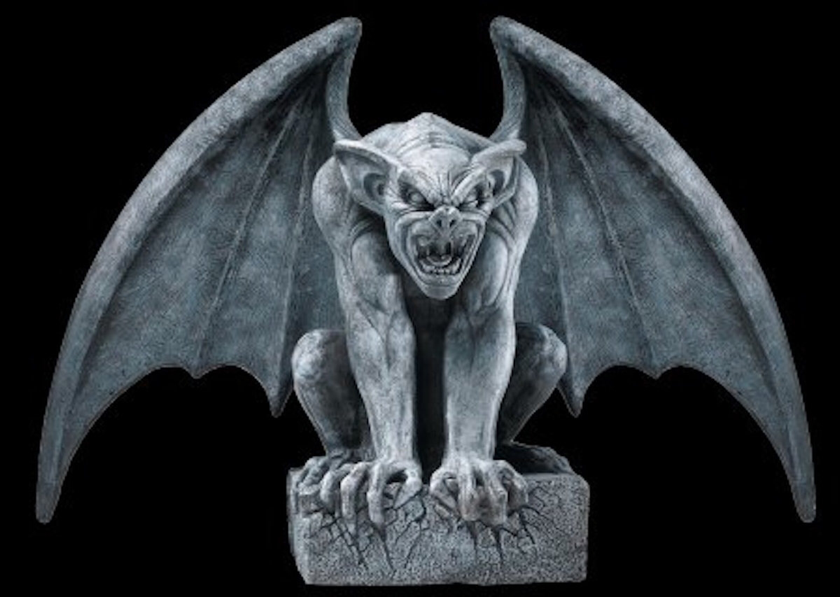
Gargoyles and Grotesques

             A gargoyle is a decorative sculpture that diverts water away from buildings. A grotesque is a very ugly, or comically distorted, creature or image.


Gargoyles 


Grotesques


Thursday, January 11, 2018

Byzantines and Mosaics


Byzantine Art


          The Byzantine Empire, also known as the Eastern Roman Empire, was the continuation of the Roman Empire in the East during Late Antiquity and the Middle Ages, when its capital city was Constantinople. Byzantine art that is still in good shape today is mostly religious. They followed traditional models that translate church theology into artistic terms. Mosaics were the main media, and figurative sculpture very rare except for small carved ivories. A mosaic is a piece of art or image made from the formation of small pieces of colored glass, stone, or other materials. Most mosaics are made of small, flat, rough square, pieces of stone or glass of different colors. This is known as tesserae.


Thursday, December 14, 2017

The Birth of Art: Basic Info


       The Roman Empire strechted from England to Egypt and from Spain to southern Russia.Because of the Romans’ exposure to foreign lands, they absorbed elements from older cultures, notably Greece. This mixed culture was transmitted to all of Western Europe and North Africa. Roman art became the building block for the art of succeeding periods. Romans later put there own spin on Greek art and philosophy. Roman art is less idealized and intellectual than Classical Greek, but more secular and functional. The Greeks shined at innovation, while the Romans’ forte was administration.

      With a huge amount of people in Rome, many of them were poor, distracted the them with public entertainment. The Colleseum seated 50,000 spectators. There was an opening act in A.D, 80, and the entire arena was flooded to stage a naval battle reenacted by a cast of 3000. Combat between gladiators was popular. Some were armed with a shield, sword, and a helmet. Others carried only a net and a trident. Boxers wore leather gloves. The reason why it was so popular and enthusiastic was because it was to the death. It was most likely the most popular form of entertainment in Rome.

      It was 1 p.m on a summer day when Mt. Vesuvius erupted, spewing molten lava and raining ash on the nearby towns of Pompeii and Herculaneum. A black mushroom cloud rose 12 miles over the peak until the villages were covered with 18 feet of ash and pumice. They remained covered and forgotten for 1700 years. Pompeii has a population of 25000 and was a luxurious resort community.

Wednesday, November 29, 2017

ARA PACIS

The Ara Pacis is an alter in Rome dedicated to Pax, the Roman goddess of Peace. The monument was commissioned by the Roman Senate on July 4, 13 BC to honor the return of Augustus to Rome after three years in Hispania and Gaul, and consecrated on January 30, 9 BC. It was originally located on the northern outskirts of Rome, a Roman Mile from the boundary of the pomerium on the west side of the Via Flaminia. It stood in the northeastern corner of the Campus Martius, the former flood plain of the Tiber River. It gradually became buried under 4 meters (13 ft) of silt deposits. It was reassembled in its current location, now the Museum of the Ara Pacis in 1938


Thursday, November 2, 2017

The Boston Museum of Science


               My time at the museum of science was pretty fun. There were really cool contraptions and tests to take to further our knowledge of science. My favorite game/test was the walking test. It calculated posture, calories burned, and grapes. Then it played it back on a monitor for you to see. Overall, the time with friends and contraptions and games/tests filled me with joy. It was really fun.